Did you know a bee needs to visit 660 flowers to make just one drop of honey? And that a third of our food is thanks to the pollinators? This highlights the enormous importance of pollinators to our environment, food production and biodiversity. During campaigns such as Bees’ Needs Week, 13-19 July, organisations across the country are encouraging people to take action to support bees, butterflies and other vital pollinating insects.
Educating & connecting
In Sussex, the environmental charity, Sussex Green Living, is helping lead the way through its Pollination Education Station (PES) Trail project which launched in 2024. The charity’s mission is to educate and connect people with practical solutions that reduce environmental impact while restoring biodiversity.
Value of healthy soil
Healthy pollinator habitats and food begin with healthy soil. Living soil is full of fungi, microbes, bacteria and earthworms that help plants thrive and produce nectar-rich flowers. Adding organic matter such as compost or leaf mould improves soil structure naturally, while no-dig gardening and mulching help preserve the delicate underground ecosystems that support both plants and wildlife. Nutrient-rich soil leads to stronger blooms from plants such as sunflowers, poppies, borage and even dandelions, all of which provide valuable food sources for bees and butterflies.
Purpose-built pollinator habitats
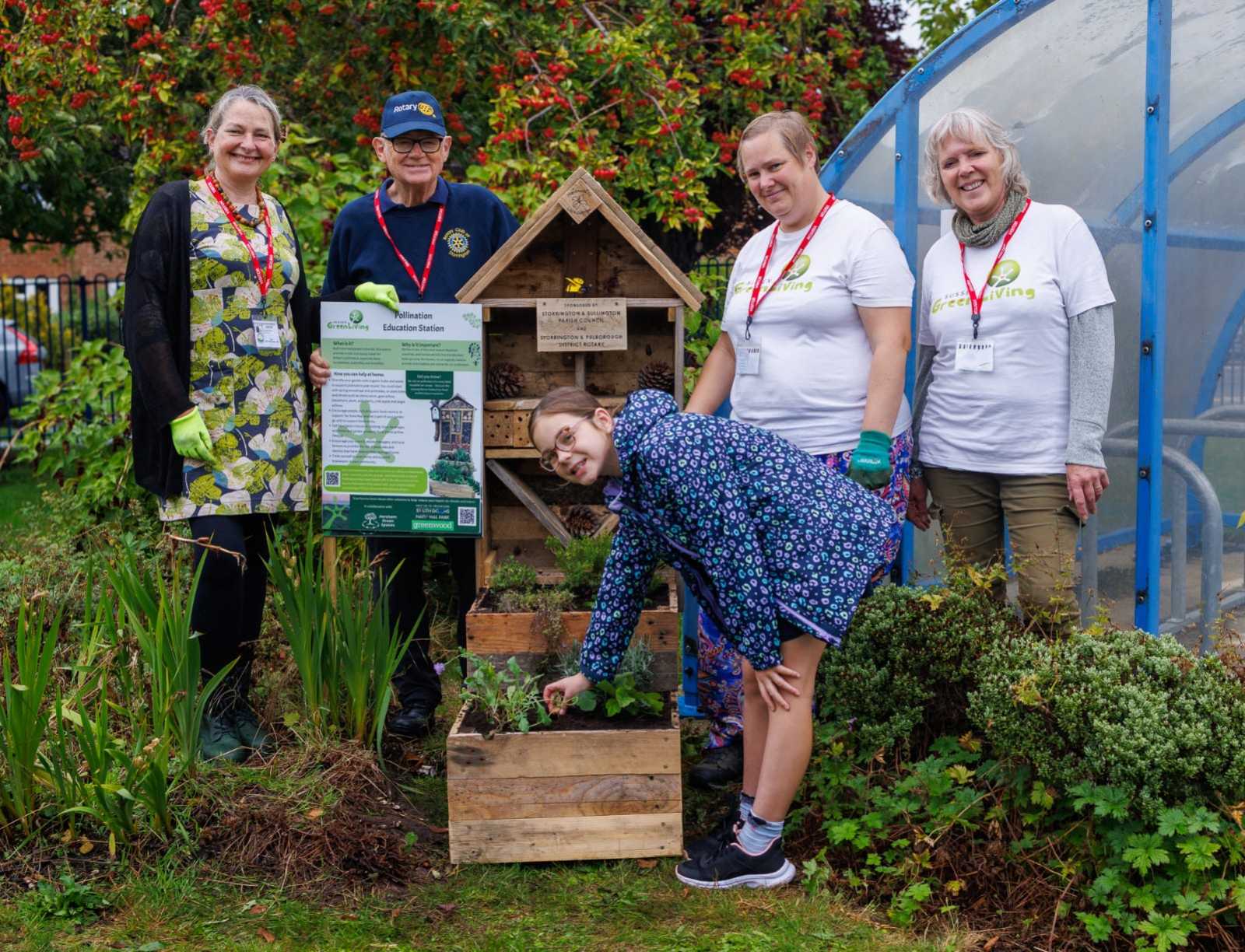
The award-nominated PES project, recognised by the Defra Bees’ Needs Champion Award in 2024, creates purpose-built pollinator habitats from reused pallet wood. These eco-friendly structures provide safe havens for pollinators while incorporating planters filled with pollinator-friendly flowers. Each has an A2 educational plaque explaining actions people can take and signposting people to the solutions page on the charity’s website www.sussexgreenliving.org.uk/solutions/. With more than 40 installed across East and West Sussex in business parks, church grounds, recreation areas and schools, the stations are helping communities better understand the essential role pollinators play in nature recovery.
Schools are playing a particularly important role in the initiative. When PES are installed in schools, Sussex Green Living delivers assemblies and hands-on planting sessions with eco councils, helping young people connect directly with nature. Some schools even use the stations as focal points for outdoor learning and forest school activities, creating spaces where children can observe pollinators up close.
The PES project also brings communities together. Installation days involve local residents, businesses, youth groups and volunteers, giving people the opportunity to take practical climate action while improving wellbeing through time spent outdoors.
Get involved
Sussex Green Living is encouraging more organisations, schools and community groups to sponsor or host a Pollination Education Station. By creating even small spaces for pollinators to thrive, communities across Sussex can make a lasting difference for biodiversity and future generations.
For more information on Pollination Education Stations visit www.sussexgreenliving.org.uk/renature